Our goal at Benchmark Commercial Lending is to provide access to commercial loans and leasing products for small businesses.


Forex trading, or foreign exchange trading, is one of the most lucrative financial markets in the world. With a daily trading volume exceeding $6 trillion, it presents opportunities for traders to engage in speculation and profit from currency fluctuations. This guide will cover essential aspects of Forex trading, strategies that can enhance your trading success, and how to choose the right trading broker, such as trading forex Trading Broker ID that suits your needs.
Forex is simply the market in which currencies are bought and sold. Participants in this market include banks, financial institutions, multi-national corporations, and individual traders. Unlike stock markets, Forex operates 24 hours a day, five days a week, allowing traders to buy and sell currencies at virtually any time.
At the core of Forex trading is the currency pair. When you trade in Forex, you’re always buying one currency while simultaneously selling another. This is known as, for instance, the EUR/USD currency pair, which represents the value of the Euro against the US Dollar.
For example, if the EUR/USD exchange rate is 1.20, this means that one Euro is equivalent to 1.20 US dollars. If you believe the Euro will strengthen against the US Dollar, you would buy EUR/USD. Conversely, if you expect the Euro to weaken, you would sell the pair. The difference in performance between the two currencies can lead to profits or losses for traders.
In Forex trading, price movements are measured in pips, which stands for “percentage in point.” One pip typically equals 0.0001 for most currency pairs. Trading takes place in lots, which define the size of the trade. A standard lot is 100,000 units of currency, while a mini lot is 10,000 units, and a micro lot is 1,000 units.
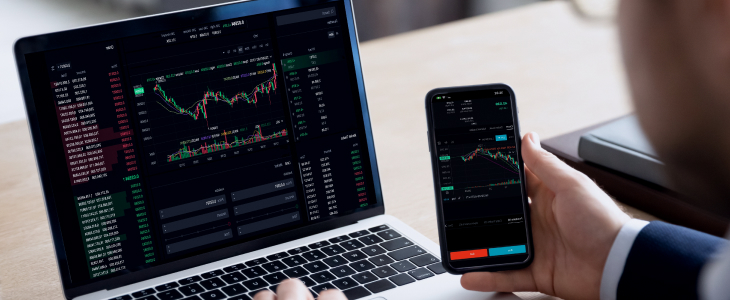
Leverage allows traders to control a larger position with a smaller amount of capital. For instance, if a broker offers 100:1 leverage, a trader can control $100,000 with just $1,000 in their account. While leverage can magnify profits, it also increases risks, making it essential to use it judiciously.
The spread is the difference between the bid price and the ask price of a currency pair. It’s essentially how brokers make their money. Some brokers charge a commission in addition to the spread, while others offer a zero-commission model but may have wider spreads.
There are various strategies that traders employ in Forex trading. Here are some of the most common:
Day trading involves making multiple trades within a single day to capitalize on short-term price movements. Positions are typically closed by the end of the trading day to avoid overnight risks.
Swing trading involves holding positions for several days to take advantage of expected price fluctuations. This strategy requires a good understanding of technical analysis and market trends.
Scalping is a high-frequency trading strategy where traders aim to make small profits over numerous trades throughout the day. This technique requires quick decision-making and execution.
Effective risk management is vital for long-term success in Forex trading. Here are some strategies to mitigate risks:

A stop-loss order automatically sells a currency pair when it reaches a specified price, helping traders limit their losses in volatile markets.
Trading a variety of currency pairs can help spread risk. Avoid putting all your capital into one trade; instead, allocate resources across different trades.
Keeping a trading journal helps traders track their performance, identify successful strategies, and learn from mistakes. This reflection can lead to improved trading strategies and decision-making.
When it comes to Forex trading, choosing the right broker is crucial for your success. Here are some factors to consider:
Ensure that the broker is regulated by a reputable financial authority. This adds a layer of security to your funds and helps ensure fair trading practices.
The trading platform should be user-friendly, reliable, and equipped with necessary tools such as advanced charting features, news feeds, and analytics.
Good customer support is essential, especially for new traders. Ensure that the broker provides assistance via various channels and is responsive to queries.
Forex trading offers significant opportunities for profit, but it also comes with considerable risks. Understanding the market, developing effective strategies, and choosing the right broker are crucial components of successful trading. As you embark on your Forex trading journey, remember that continuous learning and adapting to changing market conditions will enhance your trading skills and results.

